COORDINATION OVERLOAD
When field operations run on texts and spreadsheets,
coordination becomes the job.
Case coverage pays the price. Skuvent puts scheduling, kit allocation, and loaner dispatch in one platform built on structured workflows you can trust.
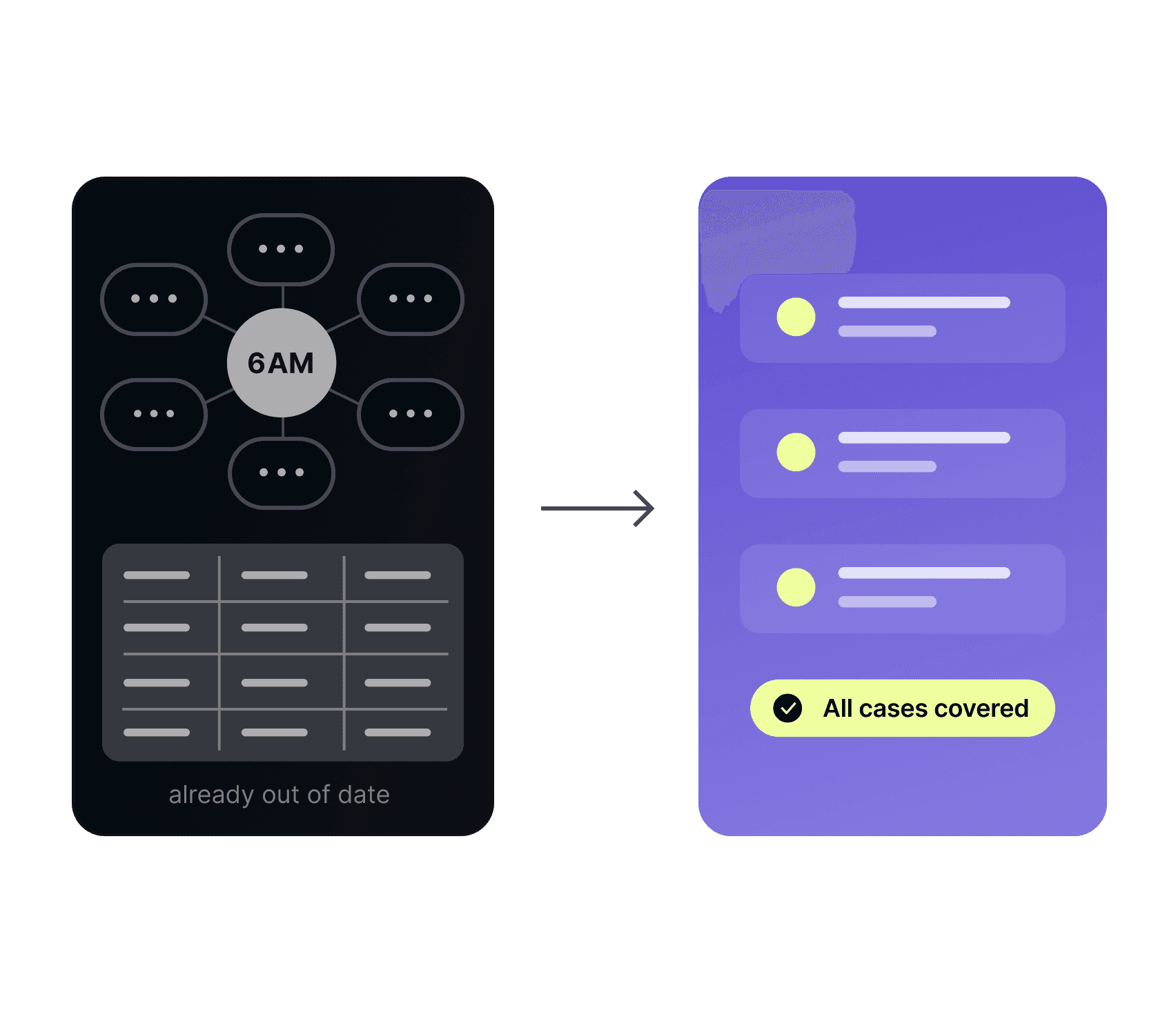
THE COST OF MANUAL COORDINATION
Coordination never stops.
Data never stabilizes.
A rep needs a set confirmed before a 6am case. Confirming it means a round of calls and texts to find out who has what, whether it is complete, and whether it can get there in time. Forty-five minutes disappear before the day has started.
Meanwhile the spreadsheet everyone trusts fell behind the moment a kit shipped, transferred, or got extended. The coordinator is not managing case coverage. They are reconstructing it, one message at a time, and hoping nothing was missed.
That is not an edge case. That is Tuesday.
WHERE THE BREAKDOWN HAPPENS
Structural issues. Repeated weekly.
No single source of truth
Scheduling, allocation, & dispatch live in separate channels.
No single view shows what’s scheduled, allocated, and in the field.
One request, 45 minutes of scrambling
A single 6am ask triggers a round of calls and texts.
Confirming one set eats most of a morning.
Loaner status is already stale
Spreadsheets fall behind the moment a kit moves.
The document everyone trusts no longer matches the field.
Ops managers fill the gaps
Work the software should close gets absorbed manually.
Gap-filling becomes the role instead of the exception.
WHO FEELS IT MOST
Spans teams. Coordination overload everywhere.



THE SKUVENT DIFFERENCE
Dashboards report. Workflows stop.
DASHBOARD
Reports status someone entered by hand, already behind the field, and leaves the chasing to your team.
WORKFLOW
Produces the status as a byproduct of the work.
Scheduling, allocation, and dispatch run in one platform. Reps request and confirm sets in the app. Coordinators see live kit status without a phone call. Overdue returns flag themselves before a case is at risk.
The data is trustworthy because the workflow created it, not because someone remembered to update a spreadsheet.

AT A GLANCE
Skuvent changes business outcomes
Current reality
No reliable answer to “Who has excess inventory?”
Inventory scattered in trunks, facilities, and loaner pools
Sales Ops chases updates by phone and text
Shadow spreadsheets fill the gaps
Skuvent workflow
Live inventory status across every location
Reps request and transfer inventory inside the app
Automated alerts for overdue, expiring, or idle inventory
Structured workflows that produce data you can trust
Business outcome
No more surprise shortages or phantom inventory counts
Ops stops chasing reps for status updates
Faster audits with guided audit workflows
Better decisions on purchasing, deployment, and forecasting
RELATED PAIN POINTS
The rest of Field Operations
Inventory Visibility
Coordination only works when you can see what you have. Real-time field inventory visibility is the foundation underneath it.
Revenue Leakage
Every untracked transfer in a manual hand-off is a potential write-off waiting to be discovered at quarter end.
Quality and Compliance
Compliance gaps start at the coordination layer. When the hand-off is structured, the audit trail takes care of itself.